Injured by Forklift at a Construction Site
A forklift injury at a construction site is rarely a simple accident. Forklifts, telehandlers, and other powered industrial trucks move heavy materials through active work areas where workers, subcontractors, visitors, vendors, inspectors, and pedestrians may be nearby. When a forklift operator, contractor, property owner, equipment company, or another party fails to control that risk, the injuries can be severe.
Johnson Attorneys Group represents people injured in forklift and construction-site accidents throughout California. From our offices in Newport Beach and Bakersfield, we investigate what happened, identify every legally responsible party, and pursue compensation supported by the evidence. Our firm has recovered over $100 million for clients.
For a complimentary case evaluation, call Johnson Attorneys Group at 1-800-208-3538 today.
Why Forklift Accidents at Construction Sites Are Different
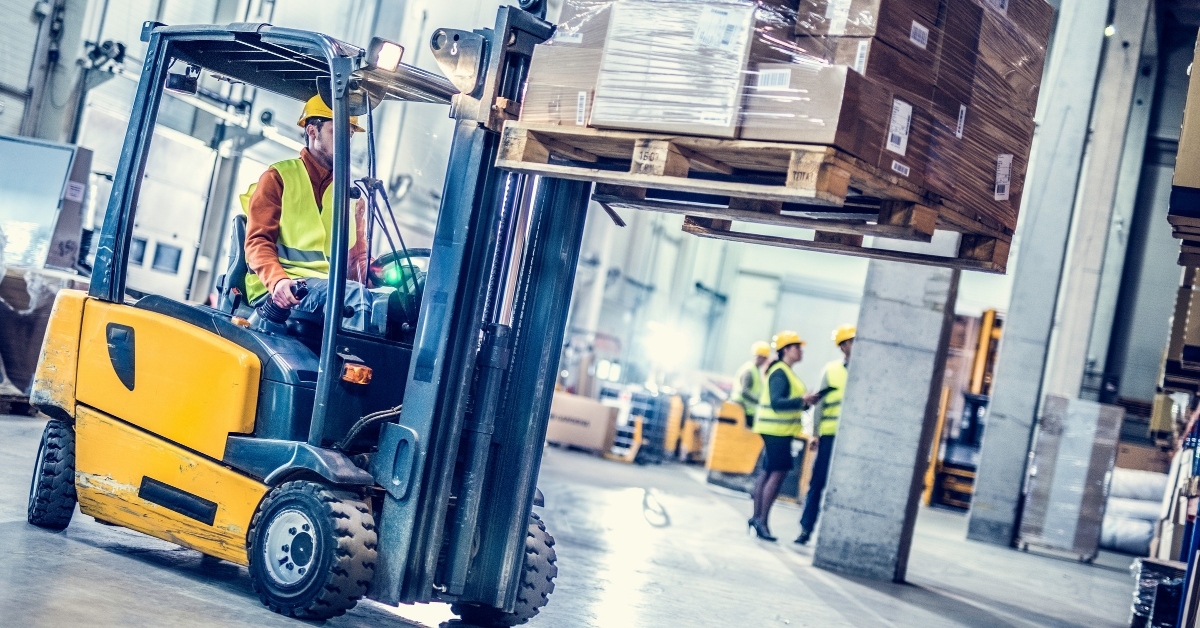
Forklifts are not ordinary vehicles. They often operate in tight spaces, around stacked materials, on uneven surfaces, near open edges, and in areas where pedestrians may not have a clear path away from danger. OSHA recognizes that workers can be injured when they are struck by lift trucks, hit by falling loads, or harmed by other powered-industrial-truck hazards.
On a construction site, the legal questions often go beyond “who was driving?” We look at site layout, supervision, training, visibility, load handling, pedestrian controls, equipment maintenance, contractor responsibilities, and whether the forklift was being used in a way that matched the site conditions.
A forklift case may involve a warehouse-style forklift, rough-terrain forklift, telehandler, pallet forks attached to other equipment, or another powered industrial truck used to lift, move, stack, or place materials. OSHA’s construction training materials recognize specialized equipment used in construction, including rough-terrain straight-mast and extended-reach forklift trucks.
Who May Be Responsible for a Forklift Injury?
Responsibility depends on the facts. In California, a forklift injury at or near a construction site may involve claims against one or more parties, including:
- The forklift operator
- The operator’s employer
- A general contractor
- A subcontractor
- A property owner or site manager
- A company responsible for traffic control or pedestrian safety
- A forklift rental company
- A maintenance or repair company
- A loading, delivery, or materials company
- A manufacturer or distributor, if a defect contributed to the injury
We do not assume there is only one responsible party. Construction projects often involve overlapping control. One company may operate the forklift, another may control the work area, another may own the property, and another may have been responsible for equipment inspection or maintenance.
That matters because the available insurance coverage may also come from more than one source.
Common Causes of Forklift Injuries
Forklift injuries can happen in many ways. Some cases involve a direct impact with a pedestrian. Others involve a load falling from the forks, a crushed foot or leg, a backing incident, a blind-corner collision, or equipment tipping or striking a worker near stored materials.
Common issues we investigate include:
- Forklift operators driving without a clear view
- Reversing without proper lookout or warning
- Poor separation between forklifts and pedestrians
- Unsafe routing of workers through active equipment zones
- Loads that are unstable, unsecured, or carried too high
- Excessive speed for the surface or work area
- Uneven ground, ramps, edges, trenches, or slopes
- Lack of spotters where visibility is limited
- Defective backup alarms, lights, brakes, tires, forks, or controls
- Inadequate operator training or site-specific instruction
- Failure to follow applicable safety rules
OSHA’s pedestrian-traffic guidance for powered industrial trucks warns that injuries can occur when forklifts strike pedestrians or pedestrians are struck by falling loads. OSHA also states that operators should be aware of workplace conditions, including pedestrian traffic, and should not move the truck without a clear view of travel.
California’s Department of Industrial Relations also publishes safety orders for industrial trucks, including rules related to industrial truck operation and equipment positioning.
Workers’ Compensation and Third-Party Claims
If you were working when the forklift accident happened, you may have a workers’ compensation claim. That claim may help with medical care and wage-loss benefits, but it may not be the only potential claim.
California Courts explain that workplace injuries may involve a workers’ compensation claim and sometimes a separate claim against the person or business that caused the injury.
That separate claim is often called a third-party personal injury claim. It may apply when someone other than your employer contributed to the accident. For example, a subcontractor, property owner, equipment rental company, delivery company, maintenance contractor, or another outside party may have played a role.
This distinction matters. Workers’ compensation and third-party injury claims are different systems with different rules, benefits, deadlines, and evidence issues. Our personal injury law firm in California evaluates both so that an injured person does not leave a valid source of recovery unexplored.
If You Were a Pedestrian, Visitor, or Bystander
Not every forklift injury victim is a construction worker. Some people are hurt while delivering materials, walking near a project, visiting the site, inspecting work, entering a nearby business, or passing through an area where construction activity spills into public or shared space.
If you were not employed at the site, your claim may focus on negligence, premises liability, unsafe site control, negligent equipment operation, or another civil liability theory. We examine who controlled the area, who created the hazard, who knew or should have known about the risk, and whether reasonable steps were taken to protect people nearby.
Evidence That Can Make or Break a Forklift Injury Claim
Forklift cases are evidence-heavy. The sooner the investigation begins, the better the chance of preserving important proof.
We may look for:
- Incident reports
- Site safety plans
- Job hazard analyses
- Daily logs and supervisor notes
- Forklift inspection records
- Maintenance and repair records
- Operator training records
- Rental or ownership documents
- Photographs of the scene and equipment
- Surveillance, dashcam, bodycam, or project-camera footage
- Witness statements
- 911, fire, ambulance, or police records
- Cal/OSHA or OSHA investigation materials, when available
- Medical records connecting the injuries to the incident
- Wage, union, payroll, or business-income records
Construction sites change quickly. Materials are moved, equipment is replaced, warning signs disappear, and video may be overwritten. A lawyer’s early work often includes sending preservation letters and identifying the companies that may have relevant records.
Injuries Caused by Forklift Accidents
Forklift accidents can cause life-changing injuries because of the weight of the equipment and the force involved. Depending on the facts, injuries may include:
- Crushed feet, legs, hands, or arms
- Broken bones
- Amputations
- Spinal cord injuries
- Back and neck injuries
- Traumatic brain injuries
- Internal injuries
- Severe lacerations
- Nerve damage
- Burns or chemical exposure from spilled materials
- Psychological trauma after a serious incident
- Fatal injuries
The medical evidence must do more than show that you were hurt. It must explain the nature of the injury, the treatment required, the expected recovery, the long-term limitations, and how the injury affects work and daily life.
Compensation in a California Forklift Injury Case
The value of a forklift injury claim depends on the evidence, the injury, available insurance, liability, medical history, and the effect on the injured person’s life. In a third-party personal injury case, compensation may include economic and non-economic losses.
California Courts explain that personal injury cases may involve losses such as medical bills, lost wages, and emotional harm.
Depending on the claim, damages may include:
- Emergency medical treatment
- Hospitalization
- Surgery
- Physical therapy and rehabilitation
- Future medical care
- Medication and assistive devices
- Lost wages
- Reduced future earning capacity
- Out-of-pocket expenses
- Pain and suffering
- Emotional distress
- Loss of enjoyment of life
- Permanent disability or disfigurement
If the injury caused a death, surviving family members may have a wrongful death claim. The available damages and eligible claimants depend on California law and the facts of the family relationship.
California Deadlines Can Be Short
Do not wait to ask about deadlines. California Courts state that personal injury cases generally have a two-year deadline from the date of injury, while property-damage cases generally have a three-year deadline from the date of damage.
Some claims move faster. If a government agency may be responsible, California Courts explain that a government claim may need to be submitted within six months for injury or property damage claims.
A government issue can arise in more ways than people expect. A forklift accident may involve a public project, public property, a public employee, a dangerous public condition, or a government contractor. The right deadline depends on the facts, so it is important to review the case early.
What to Do After a Forklift Injury
Medical care comes first. After that, the steps you take can affect your claim.
If possible, try to preserve:
- Photos of the forklift, work area, warning signs, surface conditions, and your injuries
- Names and contact information for witnesses
- The name of the forklift operator
- The names of all companies working at the site
- The equipment number, rental tag, or identifying information on the forklift
- Copies of incident reports
- Medical discharge papers and follow-up instructions
- Communications from insurance companies or company representatives
Avoid giving a recorded statement to an insurance adjuster before getting legal advice. Also avoid guessing about fault, minimizing your symptoms, or signing a release before the full injury picture is clear.
How Johnson Attorneys Group Handles Forklift Injury Cases
When we take on a forklift injury case, we start by identifying the facts that will matter legally. That means asking who controlled the equipment, who controlled the site, what safety rules applied, whether the operator was properly trained, whether pedestrians were protected, whether the equipment was maintained, and whether another company’s conduct contributed to the injury.
We then build the claim with evidence. That may include records requests, witness interviews, insurance review, medical documentation, expert analysis, and negotiation with the responsible parties. If the insurance company will not evaluate the claim fairly, litigation may be necessary.
Our role is to keep the case focused on proof: what happened, why it happened, who is legally responsible, and how the injury changed your life.
Speak With a California Forklift Injury Lawyer
Johnson Attorneys Group represents injured people across California, including workers, pedestrians, visitors, and families affected by serious construction-site and equipment accidents. We serve clients statewide from our Newport Beach and Bakersfield offices, and our firm has recovered over $100 million for clients.
Call Johnson Attorneys Group at 1-800-208-3538 for a free case evaluation.
Johnson Attorneys Group Injury & Accidents
4000 MacArthur Blvd, Suite 600 East Tower
Newport Beach, CA 92660
(949) 566-8333
Johnson Attorneys Group Injury & Accidents
4900 California Ave, Tower B, 2nd Floor Ste. 18
Bakersfield, CA 93309-7024
(661) 246-4466
At Johnson Attorneys Group, we don’t charge any legal fees unless we successfully settle or win your case. If you aren’t sure whether you have a case, we can help you review the facts. For a complimentary case evaluation, call 1-800-208-3538.